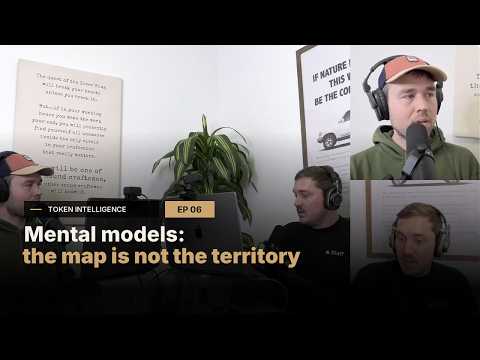
Episode 1 - Part 2: Bottlenecks mental model & tool time with Zo Computer
Eric and John discuss bottlenecks as a mental model, uncovering why constraints are leverage, not blockers. Hands-on Tool Time is with Zo Computer, a stateful, powerful, AI-enabled cloud computer.
Subscribe to get notified of new episodes
Watch on YouTube
Show Notes
Summary
In the second half of Episode 1, Eric and John tackle “bottlenecks” as a core mental model: why they limit system output, when to keep them on purpose, and how to fix the right ones without creating worse slowdowns. They share examples from product development, content quality control at scale, and how the youngest child changes family life.
In Tool Time, they go hands-on with Zo Computer, an AI-enabled cloud computer with state, plus agents and a real file system. Eric shares his screen to explore use cases like media management, hybrid search over local files, and remote development, ultimately questioning where the day-to-day value beats existing tools. Eric analyzes his entire history of blog post markdown files, and they conclude that running AI against physical files will be a big deal, but wonder if Zo is the right form factor.
Key takeaways
Mental model: bottlenecks
Identify the real constraint and keep good bottlenecks: Focus on the true bottleneck, not the noisiest part. Optimizing fast stages is wasted effort. Some constraints (security, editorial review) protect quality and safety, so preserve them intentionally.
Fewer focused people beat swarm tactics: Small, targeted groups resolve bottlenecks faster than all-hands pile-ons.
Prototype fast, still ship with specs: High-fidelity prototypes unblock product velocity, but clear specifications prevent new downstream bottlenecks.
Tool Time with Zo Computer
Save long-running AI work as real artifacts: Working against files and services with memory beats transient chats when your work is long-running or spans multiple sessions.
Files beat context windows: Hybrid search over a real file system is faster and more precise than stuffing giant context windows.
What uses cases the remote AI computer will really solve: Tools like Zo seem well suited when it beats local workflows on security (code/data never leaves a controlled environment), scalable compute (beefy GPUs/CPU on demand), or collaborative persistence (shared stateful workspaces, services, and logs that multiple people and agents can access).
Notable mentions with links
Mental model: bottlenecks
- The Great Mental Models is a book series by Shane Parrish that breaks down fundamental decision-making through Charlie Munger’s latticework of mental models.
- The Goal is a business novel by Eliyahu M. Goldratt that popularizes the Theory of Constraints and introduces the “Herbie” Boy Scout hike as a vivid metaphor for bottlenecks.
- The Phoenix Project is an IT/DevOps retelling of The Goal that applies the Theory of Constraints to modern software delivery and operations.
- The Trans-Siberian Railway is used in The Great Mental Models to show how relieving one constraint in a massive project can trigger new ones elsewhere.
- Vercel’s v0 is an AI-assisted tool for generating websites and apps that shrinks the prototyping gap and increases product velocity and fidelity.
Tools and AI
- Raycast is a next‑gen Mac launcher in the Spotlight/Alfred lineage that sparked a thought experiment about OS-level AI with rich local context and access.
- Alfred is an earlier Mac power-user launcher that provides historical context for Raycast’s approach to extensible search and commands.
- Zo Computer is a persistent cloud computer with memory, storage, agents, services, and a real file system that the hosts tested for Plex, blog analysis, and remote development.
- Plex is a personal media server the hosts explored running on Zo, revealing promise for owned media management but friction in file import and storage constraints.
Transcript
Studio (00:02.637) All right, now that we have solved AI FOMO. Yep. And started a company. We started a company. We read an 80 year old speech. We solved AI FOMO. Not sure what you came here for, but that's what you got. If you made it this far. Right, yeah. Julia keeps telling me. To both of our moms. Yes, well, and she's like, you can't do like a two hour episode. All right, now that we have solved AI FOMO. Yep. And started a company. We started a company. We read an 80 year old speech. We solved AI FOMO. Not sure what you came here for, but that's what you got. If you made it this far. Right, yeah. Julia keeps telling me. To both of our moms. Yes, well, and she's like, you can't do like a two hour episode. She's like, you can that's what she said? Yeah. OK. So is this multiple episodes? I don't know. We'll see. We have to see. Yeah, all right. We'll fix it in post. Great. OK. Two more things to cover in this episode. One is a brief discussion on mental models, and the other is tool time. We're going to talk about Zo.computer or ZoComputer. Yeah. Awesome. OK. Mental models. So here, we can show this to the video camera. She's like, you can that's what she said? Yeah. OK. So is this multiple episodes? I don't know. We'll see. We have to see. Yeah, all right. We'll fix it in post. Great. OK. Two more things to cover in this episode. One is a brief discussion on mental models, and the other is tool time. We're going to talk about Zo.computer or ZoComputer. Yeah. Awesome. OK. Mental models. So here, we can show this to the video camera. I guess maybe I could hold it up in front of me, like, my camera. The great mental models. So I actually mentioned Shane Parrish earlier. The knowledge project and brief summary. I'm not intimately, I don't have an intimate knowledge of, you know, all of the beginnings, but he got really into Charlie Munger and Warren Buffett of Berkshire Hathaway fame. In-person participant 1 (01:00.549) I guess maybe I could hold it up in front of me, like, my camera. The great mental models. So I actually mentioned Shane Parrish earlier. The knowledge project and brief summary. I'm not intimately, I don't have an intimate knowledge of, you know, all of the beginnings, but he got really into Charlie Munger and Warren Buffett of Berkshire Hathaway fame. And Charlie Munger has this, he calls it a lattice work of mental models, and he has this theory, or practical theory is probably a better way to put it, that if you get a handle on the core mental models that describe different fundamental parts of the world, that you can sort of tackle, you have the mental agility to tackle almost any subject or make a, And Charlie Munger has this, he calls it a lattice work of mental models, and he has this theory, or practical theory is probably a better way to put it, that if you get a handle on the core mental models that describe different fundamental parts of the world, that you can sort of tackle, you have the mental agility to tackle almost any subject or make a, way better than average decision about anything. And so he said, there's probably like 80 or 90 mental models that carry the freight, sort of for most things that we face, which is interesting to just mathematically define that. What a crazy thing to like research or try to understand from the beginning. That's fascinating, in all disciplines, economics, art, you know. way better than average decision about anything. And so he said, there's probably like 80 or 90 mental models that carry the freight, sort of for most things that we face, which is interesting to just mathematically define that. What a crazy thing to like research or try to understand from the beginning. That's fascinating, in all disciplines, economics, art, you know. Studio (02:29.061) math and science, et cetera, which is super cool. So there's a series of books you can buy called The Great Mental Models. Shane Parrish essentially goes through and breaks down all of these and he put them in a series. And I've been working my way through them over the last couple years and they're awesome. So I thought it'd be fun on the show just to tackle a mental model per show, which is really fun. So here's the one I chose for today. math and science, et cetera, which is super cool. So there's a series of books you can buy called The Great Mental Models. Shane Parrish essentially goes through and breaks down all of these and he put them in a series. And I've been working my way through them over the last couple years and they're awesome. So I thought it'd be fun on the show just to tackle a mental model per show, which is really fun. So here's the one I chose for today. Bottle Necks, and this is from the Systems and Mathematics, the Systems and Mathematics Mental Model book, which is volume three. Okay, Bottle Necks. I'm doing a lot of reading. This is great. Analog, analog reading. Okay, I'm just gonna bounce around and then you can enlighten us. man. Bottle Necks, and this is from the Systems and Mathematics, the Systems and Mathematics Mental Model book, which is volume three. Okay, Bottle Necks. I'm doing a lot of reading. This is great. Analog, analog reading. Okay, I'm just gonna bounce around and then you can enlighten us. man. I shouldn't have started out with the next time we'll That's right. I'll pick the model. All systems have parts that are slower than others. The slowest part of a system is called the bottleneck because as the neck of a bottle limits the amount of liquid that can flow through, bottlenecks in systems limit the amount of outputs they can produce. Viewing systems through the lens of their bottlenecks offers us a powerful perspective. These constraints can either stifle our progress or serve as a strategic choke point that when managed wisely can compel efficiency In-person participant 1 (03:27.363) I shouldn't have started out with the next time we'll That's right. I'll pick the model. All systems have parts that are slower than others. The slowest part of a system is called the bottleneck because as the neck of a bottle limits the amount of liquid that can flow through, bottlenecks in systems limit the amount of outputs they can produce. Viewing systems through the lens of their bottlenecks offers us a powerful perspective. These constraints can either stifle our progress or serve as a strategic choke point that when managed wisely can compel efficiency and innovation. Every system has a bottleneck. You cannot completely eliminate them because once you remove one, another part of the system becomes the new limiting factor. You can, however, anticipate bottlenecks and plan accordingly, or you can leverage the need to overcome them as an impetus for finding new ways of making a system work. Sometimes you can overcome bottlenecks by adding more of the same, such as dedicating more resources to ease the pressure on a bottleneck. and innovation. Every system has a bottleneck. You cannot completely eliminate them because once you remove one, another part of the system becomes the new limiting factor. You can, however, anticipate bottlenecks and plan accordingly, or you can leverage the need to overcome them as an impetus for finding new ways of making a system work. Sometimes you can overcome bottlenecks by adding more of the same, such as dedicating more resources to ease the pressure on a bottleneck. But sometimes the sole solution is to rethink that part of the system. What you wanna avoid is opening one bottleneck only to create additional worse ones for yourself later. If bottlenecks are unavoidable, we at least want them to be in a less disruptive place. And then I'm actually going to... Okay, he gives the example of the Trans-Siberian Railway. It was a massive undertaking. it was... But sometimes the sole solution is to rethink that part of the system. What you wanna avoid is opening one bottleneck only to create additional worse ones for yourself later. If bottlenecks are unavoidable, we at least want them to be in a less disruptive place. And then I'm actually going to... Okay, he gives the example of the Trans-Siberian Railway. It was a massive undertaking. it was... Studio (04:54.413) the longest railway in the world, but the challenges of building over such a long distance were unmatched at the time. The railway spans the entirety of Russia from St. Petersburg into the West, close to Finland, and the West close to Finland to Vladivostok on the Sea of Japan, just east of North Korea. Given the scope of the undertaking, 9,458 kilometers, two to three times longer than the transcontinental railways that had been built in North America at the time. the longest railway in the world, but the challenges of building over such a long distance were unmatched at the time. The railway spans the entirety of Russia from St. Petersburg into the West, close to Finland, and the West close to Finland to Vladivostok on the Sea of Japan, just east of North Korea. Given the scope of the undertaking, 9,458 kilometers, two to three times longer than the transcontinental railways that had been built in North America at the time. It's not surprising that addressing a bottleneck would have far reaching consequences. So there are a number of interesting things here. The TSR was a complex undertaking, so attempts to alleviate a bottleneck could easily cause unanticipated consequences. There is a continuous shortage of local supplies. There were limits to construction schedules caused by seasonal weather. It's not surprising that addressing a bottleneck would have far reaching consequences. So there are a number of interesting things here. The TSR was a complex undertaking, so attempts to alleviate a bottleneck could easily cause unanticipated consequences. There is a continuous shortage of local supplies. There were limits to construction schedules caused by seasonal weather. The fact that decisions about the railway had to go through a central committee in St. Petersburg with weeks on communication delayed, with a weeks on communication delay created uncoordinated short-term solutions, or uncoordinated short-term solutions to problems. In addition, the deepest lake in the world sits in the middle of the route. Which is fascinating. So, let's jump here to the conclusion, and I'll just read this. In-person participant 1 (05:49.497) The fact that decisions about the railway had to go through a central committee in St. Petersburg with weeks on communication delayed, with a weeks on communication delay created uncoordinated short-term solutions, or uncoordinated short-term solutions to problems. In addition, the deepest lake in the world sits in the middle of the route. Which is fascinating. So, let's jump here to the conclusion, and I'll just read this. Bottlenecks are the choke points, the narrow parts of the hourglass where everything slows down. They're the constraints that limit the flow, the weakest links in the chain that determine the strength of the hole. In any system, the bottleneck is the part that's holding everything else back. The tricky thing about bottlenecks is that they're not always obvious. It's easy to focus on the parts of the system that are moving quickly and assume everything is fine, but the real leverage is in finding and fixing the bottlenecks. Speed up the slowest part and you speed up the whole system. Bottlenecks are the choke points, the narrow parts of the hourglass where everything slows down. They're the constraints that limit the flow, the weakest links in the chain that determine the strength of the hole. In any system, the bottleneck is the part that's holding everything else back. The tricky thing about bottlenecks is that they're not always obvious. It's easy to focus on the parts of the system that are moving quickly and assume everything is fine, but the real leverage is in finding and fixing the bottlenecks. Speed up the slowest part and you speed up the whole system. This is a theory of constraints in a nutshell. Figure out what your bottleneck is and focus all your efforts on alleviating it. Don't waste time optimizing the parts that are already fast. They're not a limiting factor. However, bottlenecks aren't always the villains we make them out to be. Sometimes they're a necessary part of the system. Think of a security checkpoint at an airport. It slows everything down, but there's a reason. Remove it and you might speed things up, but at the cost of safety. The key is to be intentional about your bottlenecks. Choose them wisely and make sure they're serving a purpose. This is a theory of constraints in a nutshell. Figure out what your bottleneck is and focus all your efforts on alleviating it. Don't waste time optimizing the parts that are already fast. They're not a limiting factor. However, bottlenecks aren't always the villains we make them out to be. Sometimes they're a necessary part of the system. Think of a security checkpoint at an airport. It slows everything down, but there's a reason. Remove it and you might speed things up, but at the cost of safety. The key is to be intentional about your bottlenecks. Choose them wisely and make sure they're serving a purpose. Studio (07:18.913) A deliberate bottleneck can be a powerful tool for focusing effort and maintaining quality. An accidental bottleneck is just a drag on the system. Bottlenecks are the leverage points, the places where a little effort can go a long way. All right, John, enlighten us. A deliberate bottleneck can be a powerful tool for focusing effort and maintaining quality. An accidental bottleneck is just a drag on the system. Bottlenecks are the leverage points, the places where a little effort can go a long way. All right, John, enlighten us. So how many mental models between all the books? That's a good question. think there's probably, oh yeah, dozens. Dozens. Okay. Yeah. I don't know all of them, like especially off the of my head, but this has got to be near the top of the ones that you hear about all the time. Yeah. Like in a business and conversation. I agree. Bottlenecks, bottlenecks, bottle. Like. Yes. Yeah. Totally. Totally. That's part of why I picked it. Cause it's a, it's a, it's a more easily accessible one. We'll get deeper as we go along. So how many mental models between all the books? That's a good question. think there's probably, oh yeah, dozens. Dozens. Okay. Yeah. I don't know all of them, like especially off the of my head, but this has got to be near the top of the ones that you hear about all the time. Yeah. Like in a business and conversation. I agree. Bottlenecks, bottlenecks, bottle. Like. Yes. Yeah. Totally. Totally. That's part of why I picked it. Cause it's a, it's a, it's a more easily accessible one. We'll get deeper as we go along. Right. So yeah, I think, I think the interesting piece of that is because we hear it all the time. Do we even know what we're talking about? Yep. And then the second component is, well, I'll, I'll just share what I think people think it means by default. Yep. Even without thinking about it, I'd probably fall in this camp too. One bottlenecks are always bad, which we just heard not necessarily. In-person participant 1 (08:08.653) Right. So yeah, I think, I think the interesting piece of that is because we hear it all the time. Do we even know what we're talking about? Yep. And then the second component is, well, I'll, I'll just share what I think people think it means by default. Yep. Even without thinking about it, I'd probably fall in this camp too. One bottlenecks are always bad, which we just heard not necessarily. Two, we should have meetings about getting rid of the bottlenecks. And then three, everybody should be focused on getting rid of the bottlenecks. Yep. That's what you think that most people think about bottlenecks. Yeah. Yeah. That's been my professional experience of bottlenecks are bad. We should get everybody involved and everybody should think about the bottleneck and get rid of it. And what are the bottlenecks? If we can't think of one, we'll spend all our effort finding the bottleneck. Two, we should have meetings about getting rid of the bottlenecks. And then three, everybody should be focused on getting rid of the bottlenecks. Yep. That's what you think that most people think about bottlenecks. Yeah. Yeah. That's been my professional experience of bottlenecks are bad. We should get everybody involved and everybody should think about the bottleneck and get rid of it. And what are the bottlenecks? If we can't think of one, we'll spend all our effort finding the bottleneck. One, problem with that, one, bottlenecks are not all bad. Two, it's rarely the most efficient thing to focus everybody on alleviating the bottleneck. That usually makes things slower. And that it breaks the principle of having the least people needed on the problem to solve the problem, which is typically the fastest route. One, problem with that, one, bottlenecks are not all bad. Two, it's rarely the most efficient thing to focus everybody on alleviating the bottleneck. That usually makes things slower. And that it breaks the principle of having the least people needed on the problem to solve the problem, which is typically the fastest route. Studio (09:37.249) Unless you're like for knowledge work. If you're moving bricks, then more people is better. Right? Yes. But with knowledge work, typically you want to limit the number of people to the least, least number of people that's still efficient to solve the problem. So that's my first take on it. Second take would be. Unless you're like for knowledge work. If you're moving bricks, then more people is better. Right? Yes. But with knowledge work, typically you want to limit the number of people to the least, least number of people that's still efficient to solve the problem. So that's my first take on it. Second take would be. Yeah, again in the knowledge work context, thinking about, like there's two big books that come to mind. One is The Goal, which is like a business book. A lot of business curriculums include that. Two, more IT specific, a book called The Phoenix Project. Which are related because they mention, I think The Phoenix Project was sort of... They contextualize pieces of The Goal for like tech, IT jobs, and it's like 20 years newer, 30 years newer. Yeah, again in the knowledge work context, thinking about, like there's two big books that come to mind. One is The Goal, which is like a business book. A lot of business curriculums include that. Two, more IT specific, a book called The Phoenix Project. Which are related because they mention, I think The Phoenix Project was sort of... They contextualize pieces of The Goal for like tech, IT jobs, and it's like 20 years newer, 30 years newer. So that's what comes to mind when I think about bottlenecks. Yeah, yeah, absolutely. Are you familiar with both of those? Oh yeah, yeah, I haven't read The Goal, but I have read The Phoenix Project and it's a phenomenal book. so the fun thing from, and this was just so accessible, I think this is from The Goal and they mention it, something similar to The Phoenix Project, is they get you to visualize what a bottleneck is, and the visualization, I believe, is a Boy Scout Troop Hite. In-person participant 1 (10:31.749) So that's what comes to mind when I think about bottlenecks. Yeah, yeah, absolutely. Are you familiar with both of those? Oh yeah, yeah, I haven't read The Goal, but I have read The Phoenix Project and it's a phenomenal book. so the fun thing from, and this was just so accessible, I think this is from The Goal and they mention it, something similar to The Phoenix Project, is they get you to visualize what a bottleneck is, and the visualization, I believe, is a Boy Scout Troop Hite. in the wilderness. So imagine there's this troop hiking, single file in the wilderness. And there's a kid at the back that's struggling a little bit to keep up after a couple miles. I think his name's Herbie in the book. So Herbie's in the back, struggling to keep up a little bit. then the group has to stop and wait for Herbie, whatever. So the illustration is if you move Herbie to the front of the group, in the wilderness. So imagine there's this troop hiking, single file in the wilderness. And there's a kid at the back that's struggling a little bit to keep up after a couple miles. I think his name's Herbie in the book. So Herbie's in the back, struggling to keep up a little bit. then the group has to stop and wait for Herbie, whatever. So the illustration is if you move Herbie to the front of the group, and then keep going at Herbie's pace, that is actually the most efficient way, and that is the way to, I don't wanna say alleviate the bottleneck, to make things smoother for everybody, essentially. Also true of children, you're hiking with children, having the slower one at the front. Not considering the fights over who's gonna be the leader. and then keep going at Herbie's pace, that is actually the most efficient way, and that is the way to, I don't wanna say alleviate the bottleneck, to make things smoother for everybody, essentially. Also true of children, you're hiking with children, having the slower one at the front. Not considering the fights over who's gonna be the leader. Studio (12:01.765) And the practical of, you should run ahead and get some energy out. Other than that. I don't know, but that's the visual that the book uses that I think is interesting. Yeah, yeah, totally. No, I think that's great. I was thinking about an example from my experience and they talk about hidden, like bottlenecks aren't always obvious. Right. And I was thinking about that a little bit. And the practical of, you should run ahead and get some energy out. Other than that. I don't know, but that's the visual that the book uses that I think is interesting. Yeah, yeah, totally. No, I think that's great. I was thinking about an example from my experience and they talk about hidden, like bottlenecks aren't always obvious. Right. And I was thinking about that a little bit. Studio (12:32.469) I ran a product organization at a tech startup company. you know, there's one of the, one of the, one of the like preeminent challenges in building a software product, especially in the tech space, is really any, any software product, really any product, but you know, we'll just limit it to the context of my experience. So. I ran a product organization at a tech startup company. you know, there's one of the, one of the, one of the like preeminent challenges in building a software product, especially in the tech space, is really any, any software product, really any product, but you know, we'll just limit it to the context of my experience. So. how do you understand the actual pain point of the customer in a way that reveals whether or not you're solving an actual pain point or just a perceived pain point, and then will people actually pay for this or will it generate some sort of meaningful contribution to the business? That in and of itself is an entire discipline that people spend their entire life mastering. It's really difficult, really fun. how do you understand the actual pain point of the customer in a way that reveals whether or not you're solving an actual pain point or just a perceived pain point, and then will people actually pay for this or will it generate some sort of meaningful contribution to the business? That in and of itself is an entire discipline that people spend their entire life mastering. It's really difficult, really fun. But then you have to translate that to, know, generally from a product organization who's in between a bunch of other functions, you know, like go to market and, you know, support and all that sort of stuff, to like a design and engineering organization who's actually gonna go build the thing, right? And so that's just, again, just a preeminent challenge of like, how do you do that really well? There are a ton of resources around that. Marty Hagen and the Silicon Valley product group. In-person participant 1 (13:31.043) But then you have to translate that to, know, generally from a product organization who's in between a bunch of other functions, you know, like go to market and, you know, support and all that sort of stuff, to like a design and engineering organization who's actually gonna go build the thing, right? And so that's just, again, just a preeminent challenge of like, how do you do that really well? There are a ton of resources around that. Marty Hagen and the Silicon Valley product group. Yeah. Inspired, empowered. Craig, mean. Loved? Love something? What's the third one? I can't remember what the third one is. Inspired, empowered, loved. It doesn't sound right, but I think that's right. Yeah, that sounds like a... When you say them, it's like, are you sure? Are you sure I should read those books? They are good. They actually are good. It sounds like a self-help podcast. Yeah. Yeah. Inspired, empowered. Craig, mean. Loved? Love something? What's the third one? I can't remember what the third one is. Inspired, empowered, loved. It doesn't sound right, but I think that's right. Yeah, that sounds like a... When you say them, it's like, are you sure? Are you sure I should read those books? They are good. They actually are good. It sounds like a self-help podcast. Yeah. No, they're amazing. mean, it's very, eat, pray, Like. Yes, exactly. Yes, yes, yes. That's what I was going for. They're amazing. Okay. So anyways, all that to say, you know, there are all sorts of ways that we worked to make that process more efficient, right? Cause the more efficient you get there, the faster your cycles go, the quicker you solve problems for customers and the faster you get to places where they're willing to pay you more money. And one of the... No, they're amazing. mean, it's very, eat, pray, Like. Yes, exactly. Yes, yes, yes. That's what I was going for. They're amazing. Okay. So anyways, all that to say, you know, there are all sorts of ways that we worked to make that process more efficient, right? Cause the more efficient you get there, the faster your cycles go, the quicker you solve problems for customers and the faster you get to places where they're willing to pay you more money. And one of the... Studio (14:57.835) unseen bottlenecks that we actually didn't uncover until we found a tool that revealed it for us was prototyping. sure. Yeah. And so before the advent of vibe coding, it was a tremendous amount of effort to translate what the product team viewed as the customer pain point and the manifestation of that into unseen bottlenecks that we actually didn't uncover until we found a tool that revealed it for us was prototyping. sure. Yeah. And so before the advent of vibe coding, it was a tremendous amount of effort to translate what the product team viewed as the customer pain point and the manifestation of that into some sort of prototype that could be used to do a couple things. First and foremost, in my opinion, was to get something in front of customers to validate. And then second, to actually communicate to the design and engineering teams exactly what needed to be built as a high fidelity prototype, as opposed to just a documentation with specs and stuff, which need to be associated with it. Anyways, all that to say, we were Vercell customers at the time. some sort of prototype that could be used to do a couple things. First and foremost, in my opinion, was to get something in front of customers to validate. And then second, to actually communicate to the design and engineering teams exactly what needed to be built as a high fidelity prototype, as opposed to just a documentation with specs and stuff, which need to be associated with it. Anyways, all that to say, we were Vercell customers at the time. And of course I work for Versel now, so it's kind crazy to go back and think about this. We were using Versel, and Versel launched this tool called vZero, which is, they call it a vibe coding tool. It can do all sorts of awesome things, but you can essentially prompt it, and it will generate websites, apps, all that sort of stuff. And you can get super high fidelity with it. Back when we discovered, I mean, this has gotta be two years ago. In-person participant 1 (15:55.525) And of course I work for Versel now, so it's kind crazy to go back and think about this. We were using Versel, and Versel launched this tool called vZero, which is, they call it a vibe coding tool. It can do all sorts of awesome things, but you can essentially prompt it, and it will generate websites, apps, all that sort of stuff. And you can get super high fidelity with it. Back when we discovered, I mean, this has gotta be two years ago. you know, it was way more primitive than it is now. Now it can just like build, you know, sort of end-to-end software and push it to production, which is really crazy. But it, it was the most unbelievable difference in removing the bottleneck of prototyping. Cause the product manager could go talk. They, number one, spent way more time talking with customers. So they had a much more acute understanding of what the pain point was. you know, it was way more primitive than it is now. Now it can just like build, you know, sort of end-to-end software and push it to production, which is really crazy. But it, it was the most unbelievable difference in removing the bottleneck of prototyping. Cause the product manager could go talk. They, number one, spent way more time talking with customers. So they had a much more acute understanding of what the pain point was. they had more margin to determine whether or not this fit into the pricing model, whether or not there were ways to charge for it, or if it was something that would actually just, to your point about the name of the third book, loved, is this just something we need to do to make our customers love us more that we're not necessarily going to charge for? Well, and I think if you're not in this world in product or engineering or in SaaS in general, they had more margin to determine whether or not this fit into the pricing model, whether or not there were ways to charge for it, or if it was something that would actually just, to your point about the name of the third book, loved, is this just something we need to do to make our customers love us more that we're not necessarily going to charge for? Well, and I think if you're not in this world in product or engineering or in SaaS in general, Studio (17:23.747) I think the most helpful analogy for me is thinking about, all right, you need to communicate this thing. It's complex, hard to communicate, and it's like net new. So you can't just say like, it's like this. And you have to like write a letter and that's like your only form factor versus you can have a complete audio, visual, or even in person experience like explain this. I think the most helpful analogy for me is thinking about, all right, you need to communicate this thing. It's complex, hard to communicate, and it's like net new. So you can't just say like, it's like this. And you have to like write a letter and that's like your only form factor versus you can have a complete audio, visual, or even in person experience like explain this. with like a whiteboard or a presentation or whatever. It's almost like that. 100%. 100%. And that was, yeah, like I said, it was dramatic. I don't think I'm overstating it when I say that it played a big role in some ways transforming the entire way that we approach product development and our relationship on the product team with design and engineering. I think the better analogy. with like a whiteboard or a presentation or whatever. It's almost like that. 100%. 100%. And that was, yeah, like I said, it was dramatic. I don't think I'm overstating it when I say that it played a big role in some ways transforming the entire way that we approach product development and our relationship on the product team with design and engineering. I think the better analogy. is imagine you're developing physical products and you're looking at it in CAD versus a model printed on a 3D printer. I think that's a better analogy. Totally, totally, yeah. It was amazing. But that was such a hidden bottleneck, right? Sure. No one would have, if you asked people, like, what's the biggest bottleneck here, they wouldn't have said our ability to prototype, right? But once we started kicking the tires on that we realized, this is a hidden bottleneck. And once we removed it, dramatically increased velocity. In-person participant 1 (18:21.955) is imagine you're developing physical products and you're looking at it in CAD versus a model printed on a 3D printer. I think that's a better analogy. Totally, totally, yeah. It was amazing. But that was such a hidden bottleneck, right? Sure. No one would have, if you asked people, like, what's the biggest bottleneck here, they wouldn't have said our ability to prototype, right? But once we started kicking the tires on that we realized, this is a hidden bottleneck. And once we removed it, dramatically increased velocity. The other interesting thing, now that I think about it in the context of the book, is what you don't want to do is remove one bottleneck and create another one. Now the interesting thing that we had to control for was you remove this bottleneck of prototyping so you're having the highest possible fidelity communication between the product team and design and engineering about. The other interesting thing, now that I think about it in the context of the book, is what you don't want to do is remove one bottleneck and create another one. Now the interesting thing that we had to control for was you remove this bottleneck of prototyping so you're having the highest possible fidelity communication between the product team and design and engineering about. what are the basic heuristics of what we need to build, and I also went and tested this with a bunch of customers, and here's their feedback, and all this sort of stuff. But you still actually do need clear product specifications. And even more so today, where an agent may be working alongside a developer or developer's using an agent. Which I think the physical product thing is perfect, because it's like. what are the basic heuristics of what we need to build, and I also went and tested this with a bunch of customers, and here's their feedback, and all this sort of stuff. But you still actually do need clear product specifications. And even more so today, where an agent may be working alongside a developer or developer's using an agent. Which I think the physical product thing is perfect, because it's like. Studio (19:40.613) Oh, like you get to hold it and like, so 3D printed model of like your thing and you hold it and you test it with you like, oh, this is great, I'd love one. And then you hand it to engineering, you're like, here it is. No spec, no CAD drawings, no nothing. That would be worse, that's really hard. But if you hand it with the spec and the CAD drawing, I think it's similar. Yeah, yeah, it's super interesting. Okay, good bottleneck. I was actually, you brought up kids, I was thinking about this. We were talking with our older two kids, you know, so. Oh, like you get to hold it and like, so 3D printed model of like your thing and you hold it and you test it with you like, oh, this is great, I'd love one. And then you hand it to engineering, you're like, here it is. No spec, no CAD drawings, no nothing. That would be worse, that's really hard. But if you hand it with the spec and the CAD drawing, I think it's similar. Yeah, yeah, it's super interesting. Okay, good bottleneck. I was actually, you brought up kids, I was thinking about this. We were talking with our older two kids, you know, so. nine year old, seven year old, two and a half year old. So we have the baby is kinda running everyone in the household ragged, being a two and a half year old. And we were actually talking about with the older kids how they get appropriately frustrated. They're working on a marble run or something and the baby just comes in and just destroys it after 30 minutes of trying to build this masterpiece. nine year old, seven year old, two and a half year old. So we have the baby is kinda running everyone in the household ragged, being a two and a half year old. And we were actually talking about with the older kids how they get appropriately frustrated. They're working on a marble run or something and the baby just comes in and just destroys it after 30 minutes of trying to build this masterpiece. That's legitimate frustration. That's not fun. And I didn't think about it when we were talking to them about this, but we were kind of explaining like, this is a bottleneck for our entire family, right? If the baby wasn't here, we could do a lot more. I could spend more time with you, right? Whatever it is, right? Like we could stay at places longer because we wouldn't have a nap time, you know, et cetera. In-person participant 1 (20:39.503) That's legitimate frustration. That's not fun. And I didn't think about it when we were talking to them about this, but we were kind of explaining like, this is a bottleneck for our entire family, right? If the baby wasn't here, we could do a lot more. I could spend more time with you, right? Whatever it is, right? Like we could stay at places longer because we wouldn't have a nap time, you know, et cetera. In aggregate, we're all becoming more patient. We're learning how to interact with each other. We're learning how to deal with frustration. We're all trying to participate in teaching the baby what you can do and can't do. This is actually a good, if we, which of course, a seven and nine year old whose marble run just got destroyed are gonna have. In aggregate, we're all becoming more patient. We're learning how to interact with each other. We're learning how to deal with frustration. We're all trying to participate in teaching the baby what you can do and can't do. This is actually a good, if we, which of course, a seven and nine year old whose marble run just got destroyed are gonna have. Stepping back and having a conversation about mental models is exactly what they want to in that moment. Yeah. I pull out the books. there a picture book version? That would actually be awesome. But no, mean, is, but it is, it was like interesting to think about bottlenecks, right? Where it's like, this is actually a good thing. Not always a bad thing. Anyways. Okay. Anything else on bottlenecks? I think one, one kind of last thing. Stepping back and having a conversation about mental models is exactly what they want to in that moment. Yeah. I pull out the books. there a picture book version? That would actually be awesome. But no, mean, is, but it is, it was like interesting to think about bottlenecks, right? Where it's like, this is actually a good thing. Not always a bad thing. Anyways. Okay. Anything else on bottlenecks? I think one, one kind of last thing. Studio (22:08.805) that I was thinking about professionally is when you start to see them, you will see a lot of them and it can be hard doing your job when you know that you're not working on the ultimate bottleneck and that it's not your job to on the bottleneck. That's hard. So just gonna give an example. Say you're in a technical role and the bottleneck is sales. that I was thinking about professionally is when you start to see them, you will see a lot of them and it can be hard doing your job when you know that you're not working on the ultimate bottleneck and that it's not your job to on the bottleneck. That's hard. So just gonna give an example. Say you're in a technical role and the bottleneck is sales. Studio (22:38.853) This has been a company I've worked for that's, and sales is usually a bottleneck for a time and then sometimes it becomes execution and operations or tech. And then it goes back and forth. But say you're in technical role, and the clear bottleneck is sales. You guys, can make the product awesome, you can have 100 % uptime if that's your job, you can do some awesome analysis. And the bottleneck is sales, and you're not in sales. It can be hard. This has been a company I've worked for that's, and sales is usually a bottleneck for a time and then sometimes it becomes execution and operations or tech. And then it goes back and forth. But say you're in technical role, and the clear bottleneck is sales. You guys, can make the product awesome, you can have 100 % uptime if that's your job, you can do some awesome analysis. And the bottleneck is sales, and you're not in sales. It can be hard. If that's the situation, especially for an extended amount of time to feel motivated because you're, because say before you weren't really aware of bottlenecks. You're like, well, I'm doing my job and things will work out. be fine. Then you see the bottleneck and you're like, it's sales. You're like, I can't impact that really at all. And then it can feel like, what's the point? Yeah, totally. I thought of one more thing that made me think of one more good bottleneck from work. If that's the situation, especially for an extended amount of time to feel motivated because you're, because say before you weren't really aware of bottlenecks. You're like, well, I'm doing my job and things will work out. be fine. Then you see the bottleneck and you're like, it's sales. You're like, I can't impact that really at all. And then it can feel like, what's the point? Yeah, totally. I thought of one more thing that made me think of one more good bottleneck from work. So at Vercell, there's a very, very high bar for what we publish on our blog or even on social platforms like X. And the review process is very stringent. And there's a lot of discussion from people pretty high up in the company about what actually gets published. In-person participant 1 (23:38.447) So at Vercell, there's a very, very high bar for what we publish on our blog or even on social platforms like X. And the review process is very stringent. And there's a lot of discussion from people pretty high up in the company about what actually gets published. There is absolutely no question that that is a bottleneck in relative to the amount that could be published with the talent that we have on the team and their level of productivity. A lot more things could get published. But, you know, and I haven't been at Versel for a super long time, but I have always really respected their brand. And now being on the inside, I realize it is, it is an intentional bottleneck. There is absolutely no question that that is a bottleneck in relative to the amount that could be published with the talent that we have on the team and their level of productivity. A lot more things could get published. But, you know, and I haven't been at Versel for a super long time, but I have always really respected their brand. And now being on the inside, I realize it is, it is an intentional bottleneck. designed to maintain brand integrity and it works very well. It works really, really well. So there, there's a good one. There was actually funny, a project I worked on, we published a blog post and then an X post and someone, probably a troll, made a comment about like, this seems like an AI slop generated post or whatever. designed to maintain brand integrity and it works very well. It works really, really well. So there, there's a good one. There was actually funny, a project I worked on, we published a blog post and then an X post and someone, probably a troll, made a comment about like, this seems like an AI slop generated post or whatever. Studio (25:06.263) someone responded and said, if you actually knew how much labor went into crafting 150 word post here, you wouldn't. If you knew the actual number of dollars that were invested in this post. Yeah, yeah, totally, totally. But it's cool, it's very cool. It's fun to work at a company where there's a known intentional bottleneck like that and it produces really high quality. someone responded and said, if you actually knew how much labor went into crafting 150 word post here, you wouldn't. If you knew the actual number of dollars that were invested in this post. Yeah, yeah, totally, totally. But it's cool, it's very cool. It's fun to work at a company where there's a known intentional bottleneck like that and it produces really high quality. All right, mental model, we've got a handle on bottlenecks. It's tool time. It is tool time. You've got a tool. It made me feel some FOMO the first time I saw it. Yeah, we talked about this. This is what I texted you. But I'm ready for it, Okay, okay. So I'll just intro this really briefly. I actually wrote about this concept when I applied for a company called Raycast. They did not accept my job application, which I'm glad in part because I'm a... All right, mental model, we've got a handle on bottlenecks. It's tool time. It is tool time. You've got a tool. It made me feel some FOMO the first time I saw it. Yeah, we talked about this. This is what I texted you. But I'm ready for it, Okay, okay. So I'll just intro this really briefly. I actually wrote about this concept when I applied for a company called Raycast. They did not accept my job application, which I'm glad in part because I'm a... I'm at Versel now, which is wonderful. And they also weren't hiring, so I cold applied. But Raycast, for the listeners who aren't familiar with it, it started out as a sort of productivity, a developer productivity focused spotlight replacement, which if you're familiar with spotlight on a Mac, you hit command space, and you can search your entire hard drive, launch apps, do other things, search the weather, do web searches. In-person participant 1 (26:05.507) I'm at Versel now, which is wonderful. And they also weren't hiring, so I cold applied. But Raycast, for the listeners who aren't familiar with it, it started out as a sort of productivity, a developer productivity focused spotlight replacement, which if you're familiar with spotlight on a Mac, you hit command space, and you can search your entire hard drive, launch apps, do other things, search the weather, do web searches. It's Alfred was one that was around a long time ago. Yes, who's familiar with Alfred, Alfred was a spotlight replacement and you could do all sorts of power user type stuff and Raycast was sort of the next generation of that and is really an unbelievable tool. So anyways, they run on your machine locally as a native application and so I had written about what is... It's Alfred was one that was around a long time ago. Yes, who's familiar with Alfred, Alfred was a spotlight replacement and you could do all sorts of power user type stuff and Raycast was sort of the next generation of that and is really an unbelievable tool. So anyways, they run on your machine locally as a native application and so I had written about what is... if you think about Raycast that has access to your computer, your file system, even your habits and all those things, and you add AI into that mix and it's all running on your local machine, which now if you have Apple Silicon, it's pretty beefy. What does that look like? And so one of the things that I wrote about in the context of my application to Raycast was imagining this feature where the if you think about Raycast that has access to your computer, your file system, even your habits and all those things, and you add AI into that mix and it's all running on your local machine, which now if you have Apple Silicon, it's pretty beefy. What does that look like? And so one of the things that I wrote about in the context of my application to Raycast was imagining this feature where the Studio (27:31.641) battleground for AI is actually the computer operating system in the long term, not user acquisition or other things like that. So anyways, I've been kind of thinking about what this looks like in the context of a computer. And so I was talking with someone who was doing a bunch of experiments, actually they teach a computer science class. battleground for AI is actually the computer operating system in the long term, not user acquisition or other things like that. So anyways, I've been kind of thinking about what this looks like in the context of a computer. And so I was talking with someone who was doing a bunch of experiments, actually they teach a computer science class. and they have their students do assignments, it's all code, and some of the assignments are written assignments or whatever. And they use AI to do a lot of classroom management, student progression management, all those sorts of things, and they literally are just like grepping files through cursor. So they have all of, it's just files, right? And they said it's amazing, it's just way better than what they could achieve by trying to upload all of this into GPT and the context window or whatever. and they have their students do assignments, it's all code, and some of the assignments are written assignments or whatever. And they use AI to do a lot of classroom management, student progression management, all those sorts of things, and they literally are just like grepping files through cursor. So they have all of, it's just files, right? And they said it's amazing, it's just way better than what they could achieve by trying to upload all of this into GPT and the context window or whatever. which is super interesting. And they mentioned zo.computer to me. I think because the Versal CEO may have mentioned it in a tweet and they said, yeah, you know, like you should check this that fun when people are like, yeah, you probably know about this and you're like, yeah. Yeah, yeah, yeah. Anyways, Zo is super interesting because it is a dedicated computer, literally. In-person participant 1 (28:27.055) which is super interesting. And they mentioned zo.computer to me. I think because the Versal CEO may have mentioned it in a tweet and they said, yeah, you know, like you should check this that fun when people are like, yeah, you probably know about this and you're like, yeah. Yeah, yeah, yeah. Anyways, Zo is super interesting because it is a dedicated computer, literally. with provisioned memory and storage in the cloud with AI with a file system. Which is really compelling as a concept, okay? Now, I have lots of feelings about this. The last thing I'll say before we get into this is the other really interesting thing is that I've seen some projects around Vercell that are actually... with provisioned memory and storage in the cloud with AI with a file system. Which is really compelling as a concept, okay? Now, I have lots of feelings about this. The last thing I'll say before we get into this is the other really interesting thing is that I've seen some projects around Vercell that are actually... leveraging this same idea with Vercell sandboxes. So the idea behind Vercell sandboxes is that you can run, you know, there are lots of applications where you, like an agent will generate code and then it needs to run the code, right? In order to do that safely, you need to run it in a sandbox. You know, to validate it, run checks and all that sort of stuff, Well, if you put files in a sandbox and run AI over them, you're essentially replicating this concept of a leveraging this same idea with Vercell sandboxes. So the idea behind Vercell sandboxes is that you can run, you know, there are lots of applications where you, like an agent will generate code and then it needs to run the code, right? In order to do that safely, you need to run it in a sandbox. You know, to validate it, run checks and all that sort of stuff, Well, if you put files in a sandbox and run AI over them, you're essentially replicating this concept of a Studio (29:51.381) know, provisioned, provisioned compute in a sandbox, right? And you have files in the system and you can actually just run AI over it, right? And so it's, which is really interesting, it's sort of the same concept. And so I'm becoming more and more interested in this idea of files, you know, in a file system on a machine and the, and AI is actually, know, provisioned, provisioned compute in a sandbox, right? And you have files in the system and you can actually just run AI over it, right? And so it's, which is really interesting, it's sort of the same concept. And so I'm becoming more and more interested in this idea of files, you know, in a file system on a machine and the, and AI is actually not trying to do a bunch of not trying to do a bunch of crazy tool calls and all that sort of stuff, but they're literally just doing very rudimentary, like, bash stuff over a file system, which they are unbelievably good at. Which, you know what's really easy to forget? That all the layers of compute, your laptop, the servers that things are run on in data centers, et cetera, all have these same fundamental components. All the way through. And it's easy to forget that. crazy tool calls and all that sort of stuff, but they're literally just doing very rudimentary, like bash stuff over a file system, which they are unbelievably good at. Which, you know what's really easy to forget? That all the layers of compute, your laptop, the servers that things are run on in data centers, et cetera, all have these same fundamental components. All the way through. And it's easy to forget that. And if you're not... And if you're not into technology, the other thing that's worth remembering is the cost component to having what it's called state, right? Which is like, you access your computer today, like local computer today, tomorrow, like everything is saved as it was. Yep. It goes to sleep. You open it up and it maintains system state. In-person participant 1 (30:50.581) into technology. The other thing that's worth remembering is the cost component to having what is called state, right? Which is like, you access your computer today, like local computer today, tomorrow, like everything is saved as it was. Yep, it goes to sleep, you open it up and it maintains system state. Same with your phone. Same with your phone. But the majority of software today has some amount of that, because you need that, right? You need your like saved settings at least. But there is an incentive to have the least amount of state possible from a cost perspective. Because think about shared resources. If you can be stateless, which is this transient, you know, but the majority of software today has some amount of that, because you need that, right? You need your like saved settings at least. But there is an incentive to have the least amount of state possible from a cost perspective. think about shared resources. If you can be stateless, which is this transient, you know, compute. compute, trying to think of a better word than that. But if you don't need to bring back the states to think about a new chat. you can just start- Yeah, like a serverless function. Yeah, a serverless function. I'm trying to even explain it better than that. But the local computer is what people are used to. But when people use chat GPT, by default, you start a chat. And then you start a new chat. And you kind of forget about the old chat. When that's the pattern- after anything of a better word than that. But if you don't need to bring back the states to think about a new chat. And you just start. like a serverless function. Yeah, a serverless function. I'm trying to even explain it better than that. But the local computer is what people are used to. But when people use like ChatGPT, by default, you start a chat. And then you start a new chat. And you kind of forget about the old chat. When that's the pattern, you can leverage much cheaper. Studio (32:17.635) you can leverage much cheaper servers in the background that don't have to remember. And then if you need like an old chat, you kind of like load it back in. But you don't have this like fixed computer that's dedicated to you to do all the things. And that is primarily a cost reason. Yep, yep, totally. Okay, that's the other interesting thing about this is if you, well actually, okay, let's just pull up, I'll just pull up Zo and we'll just talk about it, okay? servers in the background that don't have to remember. And then if you need like an old chat, you kind of like load it back in. But you don't have this like fixed computer that's dedicated to you to do all the things and that is primarily a cost reason. Yep, yep, totally. Okay, that's the other interesting thing about this is if you, well actually, okay, let's just pull up, I'll just pull up Zo and we'll just talk about it, Okay. Okay, let me share my screen here. Let me share my screen here. Studio (32:57.125) OK. So anyway, the point of that is one of the really interesting things here is when you come back to this tool, everything is the same, like between times using the tool versus kind of being presented with a blank slate each time. Yep. OK. Let me see. At the fundamental level, OK. So anyway, the point of that is one of the really interesting things here is when you come back to this tool, everything is the same, like between times using the tool versus kind of being presented with a blank slate each time. Yep. OK. Let me see. At the fundamental level, And there's no tricks into loading in what you had last time. It kind of gets loaded and stuff. It's actually just physically there with the file system. Totally. it looks different than when I last saw it. OK. Cool. But yes, everything is physically there when you load it. OK, that was going to be a point that I made. So we're going to, it'd be really fun to get the Ben. And there's no tricks into loading in what you had last time. It kind of gets loaded and stuff. It's actually just physically there with the file system. Totally. it looks different than when I last saw it. OK. Cool. But yes, everything is physically there when you load it. OK, that was going to be a point that I made. So we're going to, it'd be really fun to get the Ben. the founder of Zo Computer on the show to talk about this. So this is just gonna be stream of consciousness, little bit of stream of consciousness here giving a little tour and just my thoughts and then you have a bunch of thoughts as well. Okay, so this is Zo. I was working on this, I was just tinkering on this. Okay, so you have chats here. So. In-person participant 1 (33:55.417) the founder of Zo Computer on the show to talk about this. So this is just gonna be stream of consciousness, little bit of stream of consciousness here giving a little tour and just my thoughts and then you have a bunch of thoughts as well. Okay, so this is Zo. I was working on this, I was just tinkering on with this. Okay, so you have chats here. So. I actually wanted to run Plex, which is like a owned media server, so I could get all of my, like manage my entire decades of music MP3 files. I thought that'd be interesting. And then I'll talk about a couple things here, but just to give a little tour, you can create an agent, which actually, this is kind of interesting. You can schedule it. So just basically a little WYSIWYG agent builder, you can... I actually wanted to run Plex, which is like a owned media server, so I could get all of my, like manage my entire decades of music MP3 files. I thought that'd be interesting. And then I'll talk about a couple things here, but just to give a little tour, you can create an agent, which actually, this is kind of interesting. You can schedule it. So just basically a little WYSIWYG agent builder, you can... build websites, you can do research, sort of all of these different types of prompts there. And then here's your computer. And I'm on the basic plan. I upgraded because when I was tinkering with this, I burned through all of my free credits. Classic. But this is the computer, which is super cool. So I mean, this is a beefy machine here that we're running. And that was my other thought here. Let's see the memory there. It's 32 gigs. 32 gigs. build websites, you can do research, sort of all of these different types of prompts there. And then here's your computer. And I'm on the basic plan. I upgraded because when I was tinkering with this, I burned through all of my free credits. Classic. But this is the computer, which is super cool. So I mean, this is a beefy machine here that we're running. And that was my other thought here. Let's see the memory there. It's 32 gigs. 32 gigs. Studio (35:20.707) if you look at their other plans, you can get up to a computer that you've probably never directly used before. As far as how powerful it is. Which is super compelling. Okay, I have thoughts on that. Here's the file system. So these are chats. So you can actually see here that this was generated from a chat and I was basically asking Zo, which is this kind of a weird like. if you look at their other plans, you can get up to a computer that you've probably never directly used before. As far as how powerful it is. Which is super compelling. Okay, I have thoughts on that. Here's the file system. So these are chats. So you can actually see here that this was generated from a chat and I was basically asking Zo. which is this kind of a weird like meta recursive nature of these types of tools where it's like what's the best way to figure out how to run plex on Zoho? It's actually just to ask, Which is pretty crazy. And then did a couple interesting things here. I tried to import from Dropbox. I tried to import files from Dropbox, okay? That was very clunky. They used PipeDrive as a connector, which is probably the right decision. PipeDrive is a super. meta recursive nature of these types of tools where it's like what's the best way to figure out how to run plex on Zoho? It's actually just to ask. Which is pretty crazy. And then did a couple interesting things here. So I tried to import from Dropbox. I tried to import files from Dropbox. That was very clunky. They used pipe drive as a connector which is probably the right decision. Pipe drive is a super. No, Pipe Dream, sorry, Pipe Drive is a serum, Pipe Dream. Who just got acquired, I think. Pipe Dream did? I think so. Really? Yeah. Look it up while I'm talking. We can live do this. So it's a little bit clunky in that I... Guess who acquired them? Who? It's kind of the worst. Workday. What? Pipe Dream? A workday company. Studio (36:19.073) No, Pipe Dream, sorry, Pipe Drive is a serum, Pipe Dream. Who just got acquired, I think. Pipe Dream did? I think so. Really? Yeah. Look it up while I'm talking. We can live do this. So it's a little bit clunky in that I... Guess who acquired them? Who? It's kind of the worst. Workday. What? Pipe Dream? A workday company. Man. Man. Moment of silence. I actually reached out to their founder, because I thought, you and I have a lot of Maybe he some free time now. Yeah. Well, no, like back in the day, because I thought. OK. They were doing some cool stuff with AI too. Yeah, for sure. Sort of like the Zapier, N8N, pipe dream side of things. importing from Dropbox is a little clunky, especially because, and this is something that. Moment of silence. I actually reached out to their founder, because I thought, you and I have a lot Maybe he some free time now. Well, no, like back in the day. OK. They were doing some cool stuff with AI, too. Yeah, for sure. Sort of like the Zapier N8n pipe dream side of things. importing from Dropbox is a little clunky, especially because, and this is something that was really interesting, you can't import a folder. was really interesting, you can't import a folder. You can only import individual files. So I have like a ton of nested files. What I was trying to do, which didn't work very well, was import some of the notes and files and other things like that that I had developed as a product leader for how to develop products. So this is like a zip the file, get it up there, unzip it. Can you do that? I mean, I guess you could, I don't know. you can only import individual files. So I have like a ton of nested files. What I was trying to do, which didn't work very well, was import some of the notes and files and other things like that that I had developed as a product leader for how to develop products. So this is like a zip the file, get it up there, unzip it. Can you do that? I mean, I guess you could. I don't know. Should we try it? Probably, yeah. In-person participant 1 (37:47.205) Should we try it? Probably, yeah. Okay, we're gonna try it. The other thing I'll show you really quickly, two other things and then we can try that. So I actually did just upload all of the blog posts I've ever written on my personal blog. Nice. Right, and so I just went in to the local folder, which this is like an awkward, sometimes when you click it doesn't like actually close it. So there's like a couple little janky things here. But it's kind of cool. So I will show you what I did with that. Okay, we're gonna try it. The other thing I'll show you really quickly, two other things and then we can try that. So I actually did just upload all of the blog posts I've ever written on my personal blog. Nice. Right, and so I just went in to the local folder, which this is like an awkward, sometimes when you click it doesn't like actually close it. So there's like a couple little janky things here. But it's kinda cool, so I will show you what I did with that. I'll show you what I do with that. So you can add this to a chat. So you added that entire folder. Added the entire folder and so this is like physical files, okay? And so this again is like a very interesting concept. So I could do the same thing and upload this to GPT if I wanted to. Yeah, sure. But what's really fascinating here is like, I'll show you what I do with that. So you can add this to a chat. So you added that entire folder. Added the entire folder, and so this is like physical files, okay? And so this again is like a very interesting concept. So I could do the same thing and upload this to GPT if I wanted to. Yeah, sure. But what's really fascinating here is like, I don't know exactly what's going on under the hood, but I can basically tell Zo on this computer, like, grab these files for this information, and it's just looking for information across the physical files, like in the file system. And when I was playing with this yesterday, it was crazy fast and way more detailed. In-person participant 1 (38:48.133) I don't know exactly what's going on under the hood, but I can basically tell Zo on this computer, like, grab these files for this information, and it's just looking for information across the physical files, like in the file system. And when I was playing with this yesterday, it was crazy fast and way more detailed. then I have experienced trying similar things and just uploading the files into the context window, right? So you don't need to blow up the context window by adding, know, however many files are in here. I'm gonna butcher this. And there's somebody we need to have on the show. Remind me. He's local and is like an expert in AI search. But I believe hybrid search is what it's called. And you can imagine like one access as we can convert all the text files. then I have experienced trying similar things and just uploading the files into the context window, right? So you don't need to blow up the context window by adding, you know, however many files are in here. I'm gonna butcher this. And there's somebody we need to have on the show. Remind me. He's local and is like an expert in AI search. But I believe hybrid search is what it's called. And you can imagine like one access as we can convert all the text files. like embed all of them, put them in a vector database and then the AI can access it. And the other is we can use like more traditional search mechanisms. I think what you're saying, and we can ask the founder of Zo. yes. Is that it's actually using more traditional mechanisms of like searching the files like you normally would. And then maybe combining that, you know, some with. like embed all of them, put them in a vector database and then the AI can access it. And the other is we can use like more traditional search mechanisms. I think what you're saying, and we can ask the founder of Zo. yes. Is that it's actually using more traditional mechanisms of like searching the files like you normally would. And then maybe combining that, you know, some with. Studio (40:09.347) the new versions. Alright summary. Okay, you ready? So create a concise summary of the history of blog posts in this folder. Pull quotes or keywords as proof points of summary and style. Then focus on the last four or five blog posts which focus more on AI. Then recommend based on the historical summary and style which topics that are AI related the author. the new versions. Alright summary. Okay, you ready? So create a concise summary of the history of blog posts in this folder. Pull quotes or keywords as proof points of summary and style. Then focus on the last four or five blog posts which focus more on AI. Then recommend based on the historical summary and style which topics that are AI related the author. should cover next. Boom, let's see what happens here. Looks like you're using Gemini 3. That's just the default, whatever they used. Yeah, so look, so those are like, Yep, so you see it's gripping. This is super cool. Find and grip, yep. Yep. Here, we'll give this a little bit more breathing room here. should cover next. Boom, let's see what happens here. Looks like you're using Gemini 3. That's just the default, whatever they used. Yeah, so look, so those are like, Yep, so you see it's gripping. This is super cool. Find and grip, yep. Yep. Here, we'll give this a little bit more breathing room here. It like it listed directory. Okay, this is interesting because it is... Okay, yeah, this is super cool. This is exactly what I was thinking about. Okay, let's see. Early era focus on the human side of tech. Transition towards scaling businesses. A pivot towards technological pragmatism. In-person participant 1 (40:59.077) It like it listed directory. Okay, this is interesting because it is... Okay, yeah, this is super cool. This is exactly what I was thinking about. Okay, let's see. Early era focus on the human side of tech. Transition towards scaling businesses. A pivot towards technological pragmatism. How AI and the modern developer tools are reshaping the actual output of knowledge workers. The authors, okay, do you think this is accurate? Direct, practical, and skeptically optimistic. They often use personal anecdotes to anchor high-level tech trends in reality. Friction, force multiplier, intentionality, velocity. definitely sounds like you. Imagine that, you grepped a bunch of words that I wrote and it's pulling things that sound like me. How AI and the modern developer tools are reshaping the actual output of knowledge workers. The authors, okay, do you think this is accurate? Direct, practical, and skeptically optimistic. They often use personal anecdotes to anchor high-level tech trends in reality. Friction, force multiplier, intentionality, velocity. definitely sounds like you. Imagine that, you grepped a bunch of words that I wrote and it's pulling things that sound like me. AI has magic. Okay. do do. be on the chat interface. AI be on the chat interface. That's an upcoming episode. AI has magic. Okay. do do. be on the chat interface. AI be on the chat interface. That's an upcoming episode. Studio (42:09.753) Future topic recommendations, the junior engineer's dilemma. Future topic recommendations, the junior engineer's dilemma. Learning to code in the age of cursor. interesting. The non-deterministic team, AI as the friction remover. The non-deterministic team I think is kind of interesting. Yeah, I don't know. The other ones I don't think you're hitting for me. Okay, interesting. So yeah, anyways, it's kind of interesting, right? Like I think that's a really good example of how actually having these files on a system as opposed to uploading it and sort of blowing up the context window. I need to code in the age of cursor. interesting. The non-deterministic team, AI as the friction remover. The non-deterministic team I think is kind of interesting. I don't know. The other ones I don't think you're hitting for me. OK, interesting. So yeah, anyways, it's kind of interesting, right? I think that's a really good example of how actually having these files on a system as opposed to uploading it and sort of blowing up the context window. you know, I think is way better. And it's interesting because Claude and ChatGPT both have the projects concept and you could have uploaded all the files into a project in either of those and done something similar. But I haven't done this in a little bit, but the way I understand how that worked is those all get embedded and then it uses In-person participant 1 (42:46.211) you know, I think is way better. And it's interesting because Claude and ChatGPT both have the projects concept and you could have uploaded all the files into a project in either of those and done something similar. But I haven't done this in a little bit, but the way I understand how that worked is those all get embedded and then it uses And then they're not like, grabbed or searched traditionally. They're all embedded and then accessed via the model. So even though you can do it that way and get maybe similar results, I don't know. This is truly a different underlying form Totally, totally. Super interesting. next example here is I uploaded our, I cloned, so you have a, And then they're not like, grabbed or searched traditionally. They're all embedded and then accessed via the model. So even though you can do it that way and get maybe similar results, I don't know. This is truly a different underlying form Totally, totally. Super interesting. Okay, next example here is I uploaded our, I cloned, so you have a, I mean the other thing, so you have a command line here because it's a computer. Yes. Okay. So I cloned our podcast website. cool. Yep, onto the computer. So. downloaded it from GitHub. I mean like Git clone. I actually, yeah. is kind of cool. So. I mean the other thing, so you have a command line here because it's a computer. Yes. Okay. So I cloned our podcast website. cool. Yep, onto the computer. So. downloaded it from GitHub. Yeah, I mean like Git clone. I actually, yeah. Which is kind of cool. So. Studio (44:13.465) You know, so you can just sort of do this. So CD. I need some auto-complete here, by the way. The feature request. Yeah. You know, so you can just sort of do this. So CD. I need some auto-complete here, by the way. The feature request. Yeah. You know, so I'm in here and then I actually had Zo install Claude. Okay, cool. You know, so you can actually run this. which this is a real world problem that I have. I'm glad we can talk about it. the, the way AI works with the like kind of default transient nature, think creates anxiety when you're using it, especially for You know, so I'm in here and then I actually had Zo install Claude. Okay, cool. You know, so you can actually run this. Which this is a real world problem that I have. I'm glad we can talk about it. The way AI works with the like kind of default transient nature, think creates anxiety when you're using it, especially for for a task where you're trying to get to some endpoint because you know you're gonna run out of context or tokens at some point and it's like you don't have a save state. So it's like playing a video game and you keep going down the level and you're like, I think I can get there this time. And then you fall, but then you start over and then you fall. I think that's a really easy state to get into. And hence the whole context engineering, do all this planning and research beforehand, which great, I think that makes sense. In-person participant 1 (44:55.247) for a task where you're trying to get to some endpoint because you know you're gonna run out of context or tokens at some point and it's like you don't have a save state. So it's like playing a video game and you keep going down the level and you're like, I think I can get there this time. And then you fall, but then you start over and then you fall. I think that's a really easy state to get into. And hence the whole context engineering, do all this planning and research beforehand, which great, I think that makes sense. But even if you know that that's what you're supposed to do, it's still easy to get into the video game mode of like, nah, I don't need to do all that. Like I can get there. And you're like jumping down the like Super Mario Bros level. Yep. And then you occasionally can get all the way there and like be at a level. And then that's further incentive to do it that way instead of doing it like probably the better way. Yeah. Yeah. Which also could be a whole episode. It could totally be an episode. Anyways, that's, but when it's more, but when the files are here, But even if you know that that's what you're supposed to do, it's still easy to get into the video game mode of like, nah, I don't need to do all that. Like I can get there. And you're like jumping down the like Super Mario Bros level. Yep. And then you occasionally can get all the way there and like be at a level. And then that's further incentive to do it that way instead of doing it like probably the better way. Yeah. Yeah. Which also could be a whole episode. It could totally be an episode. Anyways, that's, but when it's more, but when the files are here, and you are writing out your state or writing out some kind of asset as you go, it's much easier to. And you are writing out your state or writing out some kind of asset as you go. It's much, much easier to. Studio (46:08.709) stay out of context. right, how about we some updates here? Yeah, so I'm just installing dependencies, which I didn't do before. For the website, right? Yeah, just to see if we can get this. I mean, I don't know. Actually, this will be interesting to see. What does it look like to run this thing locally? I don't even know. stay out of context. right, how do we some updates here? Yeah, so I'm just installing dependencies, which I didn't do before. For the website, right? Yeah, just to see if we can get this. I mean, I don't know. Actually, this will be interesting to see. What does it look like to run this thing locally? I don't even know. Let's see. mean, that there's that Sites tab. assume you can like. Can you, I mean. Can you access that from the Sites tab now? I don't know. Like, I mean, this is a computer, so. Try it. New site. Let's see. mean, that there's that Sites tab. assume you can like. Can you, I mean. Can you access that from the Sites tab? I don't know. Like, I mean, this is a computer, so. Try it. New site. Studio (46:48.751) That's creating a site. need like the Zo browser. about discover? There is a browser. I'm pretty sure. I know. I thought there was a browser. to system maybe. That's like creating a site. need like the Zo browser. about discover? There is a browser. I'm pretty sure. I know. I thought there was a browser. Go to system maybe. Go tap. Here, you know what, let's just ask, when in doubt, ask Zoe. New chat, can I run a site locally in the Zoe browser? Here, you know what, let's just ask. When in doubt. When in doubt, ask Zo. New chat. Can I run a site locally in the Zo browser? Studio (47:29.187) But I mean, it's kind of, I this is kind of interesting. Okay, since you're, can start the next, okay, I already did that though. To make this accessible via public URL, which you can then open in the Zoho browser. It has to be registered as a service, it looks like. it did it. But I mean, it's kind of, I this is kind of interesting. Okay, since you're, can start the next, okay, I already did that though. To make this accessible via public URL, which you can then open in the Zoho browser. It has to be registered as a service, it looks like. it did it. In-person participant 1 (47:48.441) Wow. I can't see your other tab. OK, sorry. Did it work? You can also manage this on the services page. Whoops. OK, sorry. Let me share my entire screen here. I can share my entire screen. Wow. I can't see your other tab. OK, sorry. Did it You can also manage this on the services page. Whoops. OK. sorry. Let me share my entire screen here. I can share my entire screen. Studio (48:05.573) And you can see. see. Studio (48:15.349) Whoops, man, can you see zoe here? Yes dang I think it It had an error and it just dumped everything all this talk all this talk about save state You can probably go back to your other chat, no Whoops, man, can you see zoe here? Yes dang I think it It had an error and it just dumped everything all this talk all this talk about save state You can probably go back to your other chat, no In-person participant 1 (48:39.031) don't know. Can I close this? I know. Can I close this? In-person participant 1 (48:46.275) No, I think it lost everything. Now think it lost everything. no, there we go. Right, but it's not running here actually. no, there we go. Right, but it's not running here actually. Oh, maybe it is. might be. Yeah, try it. Because I think the agent in the chat started it as well. Oh, yeah. That's annoying, though. Well, you can go to services that made the service, right? See the create service. Yeah, but this is weird. Do you see this? Like, I can't even. Oh, yeah. That's weird. Studio (49:00.321) maybe it is. might be. Yeah, that's right. Because I think the agent in the chat started it as well. yeah. That's annoying, though. Well, you can go to services that made the service, right? See the create service. Yeah, but this is weird. Do you see this? Like, I can't even. yeah. That's weird. Studio (49:28.869) No, when I click services, that's what happened. And then it like, yeah, I don't know. Okay, so whatever. So let's just try PN. You see what's happening there? This is crazy. Yeah, that was odd. No, when I click services, that's what happened. And then it like, yeah, I don't know. Okay, so whatever. So let's just try PN. You see what's happening there? This is crazy. Yeah, that was odd. Studio (49:52.165) but it was already running. but it was already running. Studio (49:59.013) Yeah, it's running in... Weird. You could talk to kill it from that chat. Yeah, let me see. This is a different one though. Where are my chats? Okay. Yeah, it's running in... Weird. Okay. You could talk to Killit from that chat. Yeah, let me see. This is a different one though. Where are my chats? Okay. Kill the Kill the Studio (50:26.298) Actually here. No, I killed that one. Okay. Is there still a Actually here. No, I killed that one. Okay. Is there still a... Process running on port 3000. OK. Process running on port 3000. OK. Studio (50:42.405) And then I can visit this site. So let's see. And then I can visit this site. So let's see. Studio (50:51.397) Oh, this is because we have the thing wired up to sanity. Okay, but that's interesting. this is... that's public to the internet, I think. Like I can access that URL as well. I don't know, let's see. Can you? About to find out. It's podcast-site-ericdoddszocomputer.io. this is because we have the thing wired up to sanity. Okay, but that's interesting. this is... that's public to the internet, I think. Like, I could access that URL as well. I don't know, let's see. Can you? About to find out. It's podcast-site-ericdoddszocomputer.io. In-person participant 1 (51:23.205) I'm sharing my whole screen, otherwise I would... Yeah, yeah, no worries. Message or something to you. I'm sharing my whole screen, otherwise I would... Yeah, yeah, no worries. Message or so I could... Yep, I get that same error. Okay, so that's super interesting. Okay, this is really fascinating. So I'm running, I'm basically doing remote development on this actual computer, which is Yeah, and you could actually... Totally. see a visual of what you were doing. Right, that's super cool. Okay, do we want to run a test really quickly of trying to upload a zip and then we can talk more about this? Yep, I get that same error. Okay, so that's super interesting. Okay, so this is really fascinating. So I'm running, I'm basically doing remote development on this actual computer, which is Yeah, and you could actually... Totally. ...iterate with it, view, see a visual of what you were doing. Right, that's super cool. Okay, do we want to run a test really quickly of trying to upload a zip and then we can talk more about this? Yes. Let me just grab some random files to zip. Studio (52:02.137) Yes. Let me just grab some random files to zip. In-person participant 1 (52:15.333) Okay. Okay. In-person participant 1 (52:21.377) Zotest zip. Okay, so I have a couple thoughts here. Zotest zip. Okay, so I have a couple thoughts here. One of my thoughts is this is really cool and I see the potential of this. I definitely see the potential of this. One of my thoughts is this is really cool and I see the potential of this. I definitely see the potential of this. But I guess my question is like. Studio (52:45.839) But I guess my question is like. In-person participant 1 (52:51.225) what are you gonna use this for? You know, like. what are you gonna use this for? You know, like. In-person participant 1 (52:59.937) It is super cool, but, sorry, I know this sounds crazy, but I'm trying to clean up my desktop and find some files to zip. This is super interesting, but where's the practical utility? I guess maybe to put a sharper point on it, and this is why I would love to have the ZoFounder come on and talk to us, is what are you gonna use this for? It is super cool, but, sorry, I know this sounds crazy, but I'm trying to clean up my desktop and find some files to zip. This is super interesting, but where's the practical utility? I guess maybe to put a sharper point on it, and this is why I would love to have the ZoFounder come on and talk to us, is what are you gonna use this for? Day to day. I mean, I think this is awesome. And I'm paying whatever the minimum plan is, 18 bucks a month. But what am I going to keep? Day to day. I mean, I think this is awesome. And I'm paying whatever the minimum plan is, 18 bucks a month. But what am I going to keep? I have not found anything yet. I mean, maybe when I can start running Clux. And they also have some cool ways they use a service where you can keep files on a hard drive and do a virtual sync to their cloud so that you don't, you know, because my media library, I'd have to be on the top plan and I'm not gonna pay hundreds of dollars to have, you know, to stream my own MP3s because there are other ways to do that. But you can sort of... Studio (53:39.509) I have not found anything yet. I mean, maybe when I can start running Plex. And they also have some cool ways they use a service where you can keep files on a hard drive and do a virtual sync to their cloud so that you don't, you know, because my media library, I'd have to be on the top plan and I'm not gonna pay hundreds of dollars to have, you know, to stream my own MP3s because there are other ways to do that. But you can sort of... create a link between a hard drive and Zoho so that Zoho can essentially stream from that hard drive and make the stuff available and use the compute on the Zoho computer. And so that may be worth 20 bucks a month. But I think if you think back about this form factor, in a way less cutting edge way, it's a remote desktop form factor. create a link between a hard drive and Zoho so that Zoho can essentially stream from that hard drive and make the stuff available and use the compute on the Zoho computer. And so that may be worth 20 bucks a month. But I think if you think back about this form factor, way less cutting edge way, it's a remote desktop form factor. Like re-imagined. So like back in the day, yes. You remote into like a Windows computer. Yes. Or you have like, what was it called? Back to your Mac, which was a way to remote into a Mac. Yep. So that's the underlying piece there. The commercial reason to do this is security, essentially. Like re-imagined. So like back in the day, yes. You remote into like a Windows computer. Yes. Or you have like, what was it called? Back to your Mac, which was a way to remote into a Mac. Yep. So that's the underlying piece there. The commercial reason to do this is security, essentially. So you can imagine you've got this. In-person participant 1 (54:59.269) So you can imagine you've got this team of developers in a secure environment and you're like, I don't want anything touching physical hardware that they're using. You need to do everything remotely. We want full control over the remote environment. The code doesn't leave it. The chats don't leave it. Interesting, right? That to me would be the most like commercially viable. But I guess, but that's what's actually interesting to me. So the local file stuff is cool. team of developers in a secure environment and you're like, I don't want anything touching physical hardware that they're using. You need do everything remotely. We want full control over the remote environment. The code doesn't leave it. The chats don't leave it. Interesting, right? That to me would be the most commercially viable But I guess that's what's actually interesting to me. So the local file stuff is cool. But that's not, mean, your average person's not going to think about that as like the main utility. And I mean, the other thing that's interesting, and I'm sure there are things that we're not thinking about, but you can do that with cursor or another tool just on the file system locally, right? So it's like, okay, well that's interesting. So a lot of mine is like, somebody buys it and forces you to use it, right? But that's not, mean, your average person's not going to think about that as like the main utility. And I mean, the other thing that's interesting, and I'm sure there are things that we're not thinking about, but you can do that with cursor or another tool just on the file system locally, right? So it's like, okay, well that's interesting. So a lot of mine is like, somebody buys it and forces you to use it, right? Because that's the security play. Right, but they kind of have a consumer focus go to market is what it seems like, right? So like, I'm building this, you know, and so I have a task name, you know, and then I can, I mean, maybe this is interesting, you know, but again, you know, where's, I don't know, and then what was I going to say? Okay, Sites Discover system. Where is integrations? Interesting. So there's like a text integration. Studio (55:54.629) Because that's the security play. Right, but they kind of have a consumer focus go to market is what it seems like, right? So like, I'm building this, you know, and so I have a task name, you know, and then I can, I mean, maybe this is interesting, you know, but again, you know, where's, I don't know, and then what was I going to say? Okay, Sites Discover system. Where is integrations? Interesting. So there's like a text integration. Here's the connections. yeah, you can actually text it, which is kind of interesting. Which I haven't tried yet. But I guess what's weird to me here is that you have Gmail, Google Calendar, Google Drive, Notion, Drop. These are all like the normal, mean basically it's the subset of knowledge worker productivity tools that have reasonably sophisticated MC, MPCs, MCP servers. You know, that have tool calls and stuff. Here's the connections. yeah, you can actually text it, which is kind of interesting. Which I haven't tried yet. But I guess what's weird to me here is that you have Gmail, Google Calendar, Google Drive, Notion, Drop. These are all like the normal, I mean basically it's the subset of knowledge worker productivity tools that have reasonably sophisticated MC, MPCs, MCP servers. You know, that have tool calls and stuff. which I get is helpful, but that also kind of defeats, you can do that in GPT. Like having this on a computer that I have to upload all of my files to, it just seems like a really heavy-handed way to go after that sort of consumer-ish market. I don't know, it's just interesting. Okay, I uploaded our zip. which I get is helpful, but that also kind of defeats, you can do that in GPT. Like having this on a computer that I have to upload all of my files to, it just seems like a really heavy-handed way to go after that sort of consumer-ish market. I don't know, it's just interesting. Okay, I uploaded our zip. In-person participant 1 (57:16.045) unsupported file type. So that's the other thing. So anyways, that's why I would love to get the founder on to talk about this because at a base level, I think it's super interesting. I mean, one of the things I've conceived of with Raycast is that it running locally on my computer and having access to all those tools and everything. Unsupported file type. So that's the other thing. So anyways, that's why I would love to get the founder on to talk about this because at a base level, I think it's super interesting. I mean, one of the things I've conceived of with Raycast is that it running locally on my computer and having access to all those tools and everything gives it way more context for my knowledge work than even gives it way more context for my knowledge work than even GPT Enterprise or whatever might have. But Zo, actually being a remote computer is a more awkward way to do that because I have to upload all of my stuff. Which conceivably they could come up with some native syncing apps for files. GBT enterprise, know, or whatever, you know, might have. But Zo actually being a remote computer is a more awkward way to do that. Because I have to upload all of my stuff, right? Which conceivably they could come up with some native syncing apps for files. Yeah, I just don't know. It's just interesting. Where's the... Where's the... Like in everything we just covered... Yeah, I just don't know. It's just interesting. Where's the, like in everything we just covered, like where's the $20 a month value that I'm not getting somewhere else? I don't know. I don't know. don't I like, it's a good one though. I really liked this, like consideration of a different form factor. That was fun. Because you could look at a million, not a million, but hundreds of clones of like this is chat GPT-4. Studio (58:15.461) Like where's the $20 a month value that I'm not getting somewhere else? I don't know. I don't know. don't I like, it's a good one though. I really like this like consideration of a different form factor that was fun. Because you could look at a million, not a million, but hundreds of clones of like, this is Chat DPT for fill in the blank, you know? And it's basically Chat DPT and they have like a very subtle twist. Yeah, yeah, totally. fill in the blank, know? And it's basically chat dbt and they have like a very subtle twist. Yeah, yeah, totally. Totally. think it's one of those things where the architecture is fascinating and I think will be a gigantic step forward in some way. I just haven't quite found what that is yet and or I'm just not the right target user for sure. So anyways, fascinating. And I think that's a wrap. Totally, I think it's one of those things where the architecture is fascinating and I think will be a gigantic step forward in some way. I just haven't quite found what that is yet. And or I'm just not the right target user for sure. So anyways, fascinating. And I think that's a wrap. Yeah, think it is. for episode one. Excellent. All right, we'll catch you on the next one. See ya. Yeah, think it is. for episode one. All right. All right, we'll catch you on the next one. See ya.